
The Ultimate Guide to Acadia's Park Loop Road
Everything you need to know about driving the 27-mile scenic loop that hits the park's biggest highlights, from Sand Beach to Cadillac Mountain.
The Park Loop Road is the primary artery of Acadia National Park. This 27-mile scenic drive connects the park’s most iconic sights, including Sand Beach, Thunder Hole, Otter Cliff, and Jordan Pond.
If you only have one day in Acadia, driving this loop is how you spend it.
The Route at a Glance

- Length: 27 miles (43 km), built between 1921 and 1958
- Time: 3-4 hours (with stops)
- Direction: Part of the loop is one-way. For the full tour, NPS suggests starting at Hulls Cove Visitor Center and following signs for the one-way section to Sand Beach. Pay attention to the signs.
- Fee: You must have a valid park pass in your windshield. $35 per vehicle for 7 days, $20 per person on foot or bike, or $70 for an Acadia annual pass. Non-US residents pay an extra $100 per person aged 16 and over unless entering on an Annual or America the Beautiful pass.
- Cadillac Summit Road needs a separate $6 vehicle reservation, required 20 May to 25 October 2026, booked through recreation.gov. Reservations cannot be bought at the park. 30% are released 90 days ahead at 10am ET and 70% two days ahead. A reservation does not replace your entrance pass; you need both. It is not required if you arrive on foot, by bicycle or by taxi.
Key Stops (In Order)
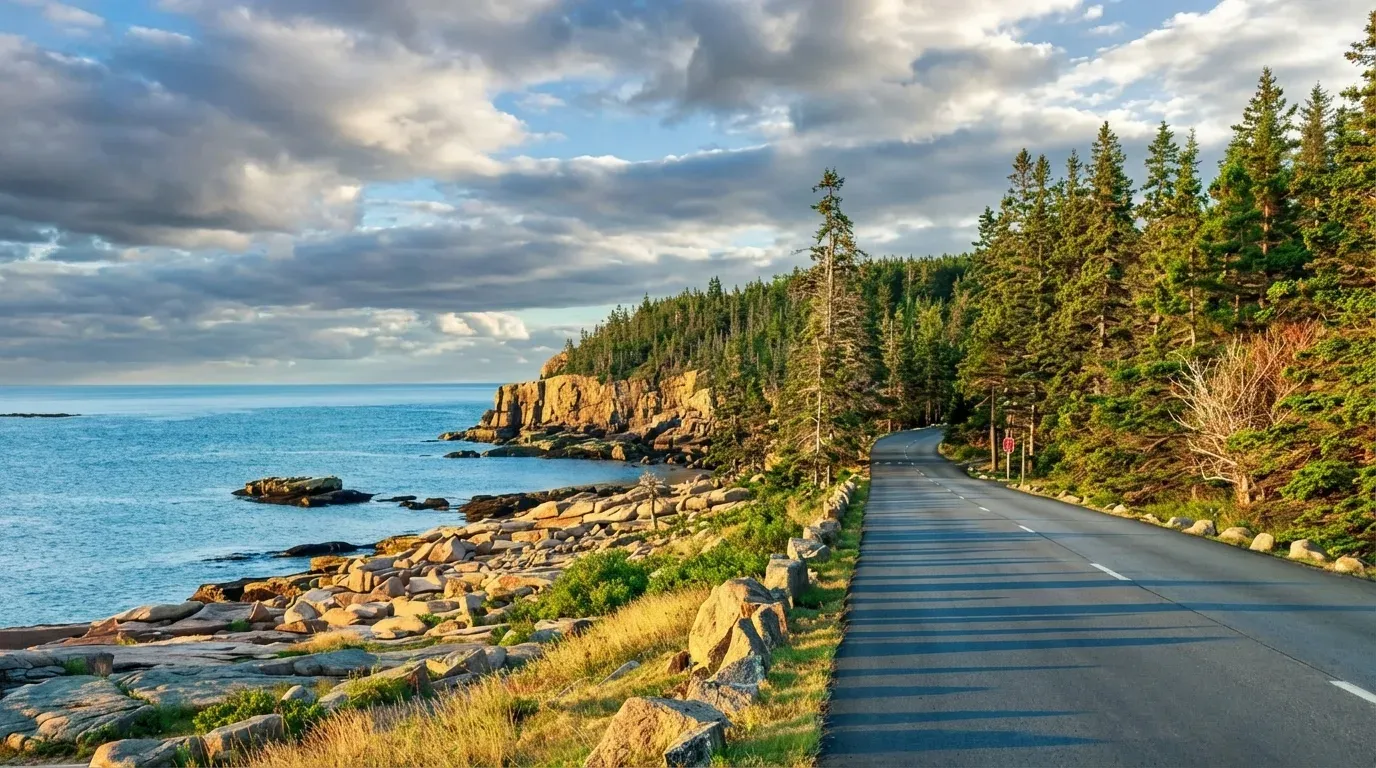
Since the road is one-way, you need to hit these in order. If you miss one, you have to drive the whole loop again!
1. Sieur de Monts Spring
The “Heart of Acadia.” Visit the Nature Center and the Wild Gardens of Acadia here. It’s a quiet start before the crowds.
2. Sand Beach
One of the few sandy beaches in a park famous for rock.
- The Vibe: Gorgeous but cold. NPS gives the normal water range as 50-60°F (10-15°C) depending on the time of year, and warns about strong tides and rogue waves.
- The Hike: The trailhead for the famous Beehive Trail (iron rungs, very steep) is right across the street. Alternatively, take the Ocean Path, which starts here. It is level for the first 0.7 miles to Thunder Hole, then gets uneven, with granite staircases past Otter Cliffs.
3. Thunder Hole
A carved-out inlet where waves force air out of a narrow channel with a thunderous boom. NPS reports wave sprays seen at more than 40 feet (12 m).
- Pro Tip: NPS recommends arriving one to two hours before high tide for the best chance of hearing the roar. At low tide, take the stairs down for a close look at the cliff walls instead. Check the tide charts.
4. Otter Cliff
One of the most spectacular sights on the East Coast. These 110-foot pink granite cliffs drop straight into the ocean, and NPS calls them some of the tallest headlands on the Atlantic coast of North America. This is the high point of the Ocean Path and a popular spot for rock climbers.
5. Jordan Pond
At 150 feet, the deepest lake in the park and the second largest. It’s often called the clearest lake in Maine.
- Swimming is prohibited. Jordan Pond is a designated public water supply, so wading and swimming are banned at all times.
- The Jordan Pond House: Famous for its popovers and tea on the lawn, a tradition dating to 1893. Note that reservations are limited; the restaurant holds most tables for walk-ins and reports an average 40-minute wait in peak season.
- The Hike: The Jordan Pond Path is a 3.3-mile loop around the water. It is close to level, but the footing is uneven in places, over wooden boardwalks, rocks and footbridges.
6. Cadillac Mountain Summit Road
Near the end of the loop, you can turn onto the road up Cadillac Mountain.
- Warning: From May through October, you need a separate vehicle reservation to drive up Cadillac Road. Do not just show up; you will be turned away.
Logistics & Tips
- Go Early or Late: Between 10 AM and 3 PM in July and August, the road can be a parking lot. The right lane allows parking, which effectively turns the scenic drive into a one-lane road.
- The Island Explorer: Consider leaving the car behind. The fare-free, propane-powered buses link hotels, inns and campgrounds with destinations in the park. Most routes ran 23 June to 12 October in 2026, so check the current season before planning around them.
- One-Way Warning: The section from Sand Beach to Jordan Pond is one-way. Once you pass Sand Beach, you are committed.
Seasonal Access
- Summer/Fall: Fully open.
- Winter: The Park Loop Road closes to motor vehicles on 1 December each year, sometimes earlier if winter arrives early, and stays closed until 15 April. It remains open to walkers, cyclists and skiers, and NPS also permits roller skates, skateboards and roller skis while it is car-free.
Beyond the Main Stops
While everyone hits the major attractions, the Park Loop has quieter spots worth discovering:
Schooner Head Overlook
An early turnoff before the main loop offers excellent views of the Porcupine Islands. Much less crowded than the main viewpoints.
The Ocean Path
This trail parallels the road from Sand Beach to Otter Point: 2.2 miles one way, 4.4 round trip, and 1-2 hours each way. Walking it lets you experience the coast at a slower pace than driving, with access to ledges and coves you’d otherwise miss.
Great Head Trail
Starting from Sand Beach, this rocky 1.9-mile round trip climbs to a high point of 145 feet above the sea, where the ruins of a 1915 tea house still stand. There is a shorter 1.3-mile option. Footing is uneven, with short steep sections and steep drops into the ocean, so keep children close.
Little Hunters Beach
A tucked-away cobblestone beach southeast of Otter Point and Otter Cove that most visitors never find. It sits below the road, reached by a stairway, and the turnoff is small and easy to miss. The cobbles are the work of glaciers and heavy surf.
Photography Tips
The Park Loop Road is one of the most photographed drives in America. To get better shots than the crowds:
- Golden Hour: The granite cliffs glow at sunrise and sunset. Otter Cliff at sunrise is particularly spectacular.
- Fog Days: Don’t put away your camera. Fog rolling off the ocean creates moody, atmospheric images that capture Acadia’s mystery.
- Tide Timing: Thunder Hole is dramatic at incoming high tide. The cobblestone beaches look different at different tide stages.
- Off-Peak Hours: The crowds thin dramatically before 9 AM and after 5 PM.
Combining with Carriage Roads
The Park Loop Road is just one way to experience Acadia. The 45 miles of carriage roads given by John D. Rockefeller Jr. and family offer car-free exploration through the park’s interior. Roughly 16 feet wide and built as broken-stone roads, they are shared by walkers, cyclists and horse-drawn carriages. Several intersect with or parallel the Park Loop, so you can combine driving with walking or biking.
Highlights accessible from Park Loop Road stops:
- Jordan Pond Carriage Roads: Flat, scenic riding from the Jordan Pond House.
- Day Mountain: A carriage road leads to a summit with excellent views.
- Eagle Lake Loop: Popular for biking, with lake views throughout.
Planning Your Loop
For first-time visitors, here’s a suggested approach:
Morning (7-11 AM): Start early to beat crowds. Drive the full loop first without stopping at major sites. Get a feel for the layout. Then circle back to Sand Beach and work your way around.
Midday (11 AM-2 PM): This is peak crowd time. Consider lunch at Jordan Pond House (with reservation) or a hike that takes you away from the road.
Afternoon (2-6 PM): Return to any spots you missed. The light gets better as afternoon progresses, and crowds thin toward evening.
Evening: If staying on the island, catch sunset from Cadillac Mountain (reservation required) or Seawall on the quieter side.
The Park Loop Road is Acadia’s greatest hit, but it’s also a starting point. The more time you spend here, the more you’ll discover beyond the obvious stops, and the more you’ll want to return.