
The Ultimate Guide to Hiking in Maine
From rugged mountain peaks to serene coastal paths, discover the best hiking trails in Maine. A guide for every skill level.
Hiking in Maine is a study in contrasts. You can start your day scrambling up an exposed granite ridge in the western mountains and end it walking a gentle path along a salt marsh at sunset. From the rugged coast of Acadia to the pristine wilderness of the North Woods. Maine offers trails for every skill level and ambition.
Iconic Mountain Hikes (The 4,000 Footers & More)
Mount Katahdin (Baxter State Park)
The Ultimate Challenge Katahdin isn’t just Maine’s highest peak (5,267 ft). It’s a spiritual destination. As the northern terminus of the Appalachian Trail, it represents the culmination of months-long journeys.
- The Knife Edge: The most famous route, a narrow, exposed ridge with thousand-foot drops on both sides. Not for the faint of heart or those with a fear of heights.
- Need to Know: Parking reservations are mandatory and sell out months in advance. This is a strenuous, full-day hike. Start before dawn.
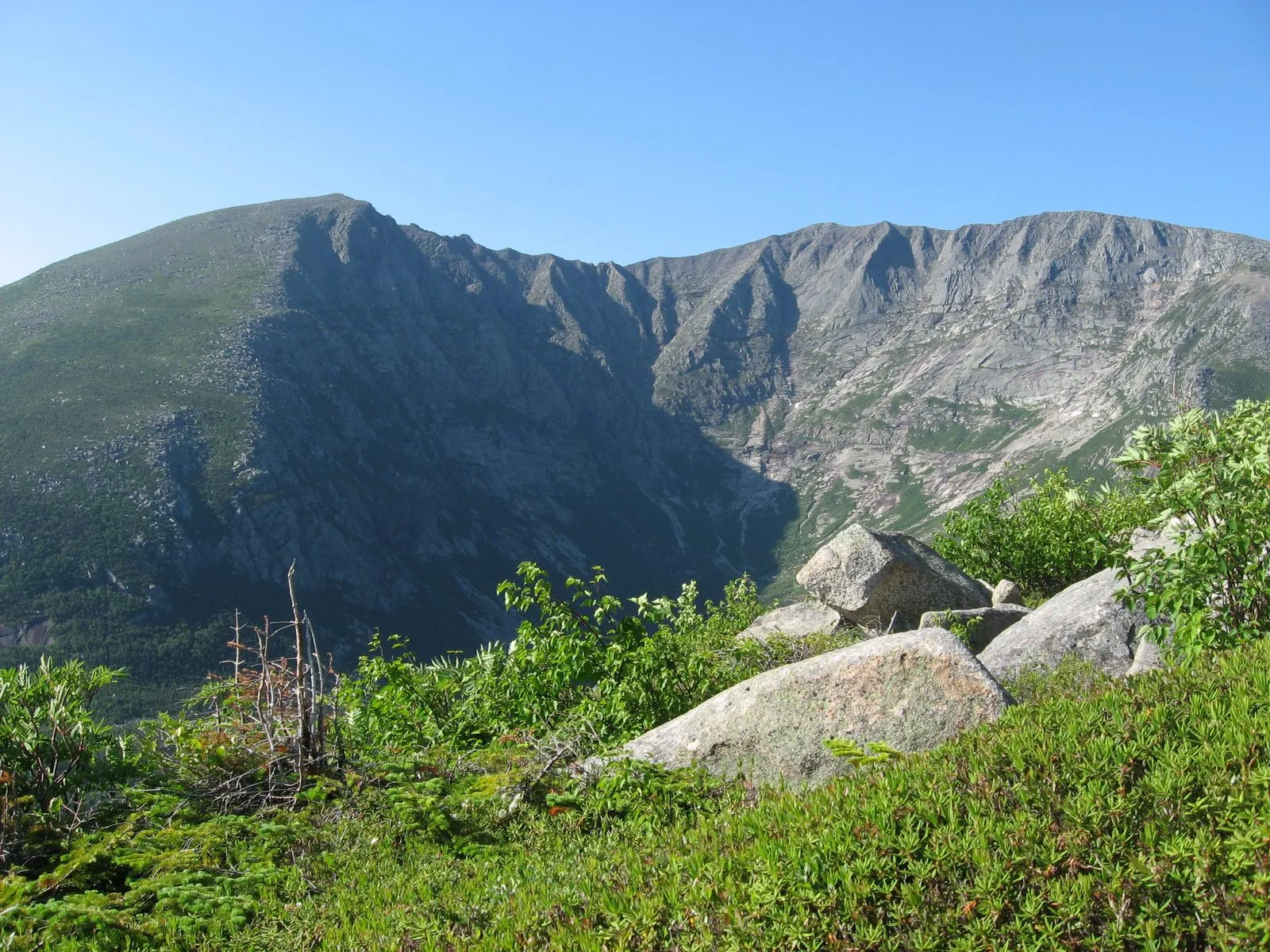 The South Basin cirque, with the Knife Edge on the skyline at right and Baxter Peak, 5,267 ft, at left. Maine residents enter Baxter free; non-residents pay $20, or $50 for a season pass. Photo by Fredlyfish4 via Wikimedia Commons, CC BY-SA 4.0, resized.
.jpg)
Tumbledown Mountain (Weld)
The Alpine Swimming Hole Tumbledown offers a reward most summits can’t match: a pristine alpine pond perfect for swimming.
- The Loop: Take the Brook Trail up (scrambling required) and the Loop Trail down.
- Highlight: “Fat Man’s Misery,” a narrow chimney you must squeeze through near the summit.
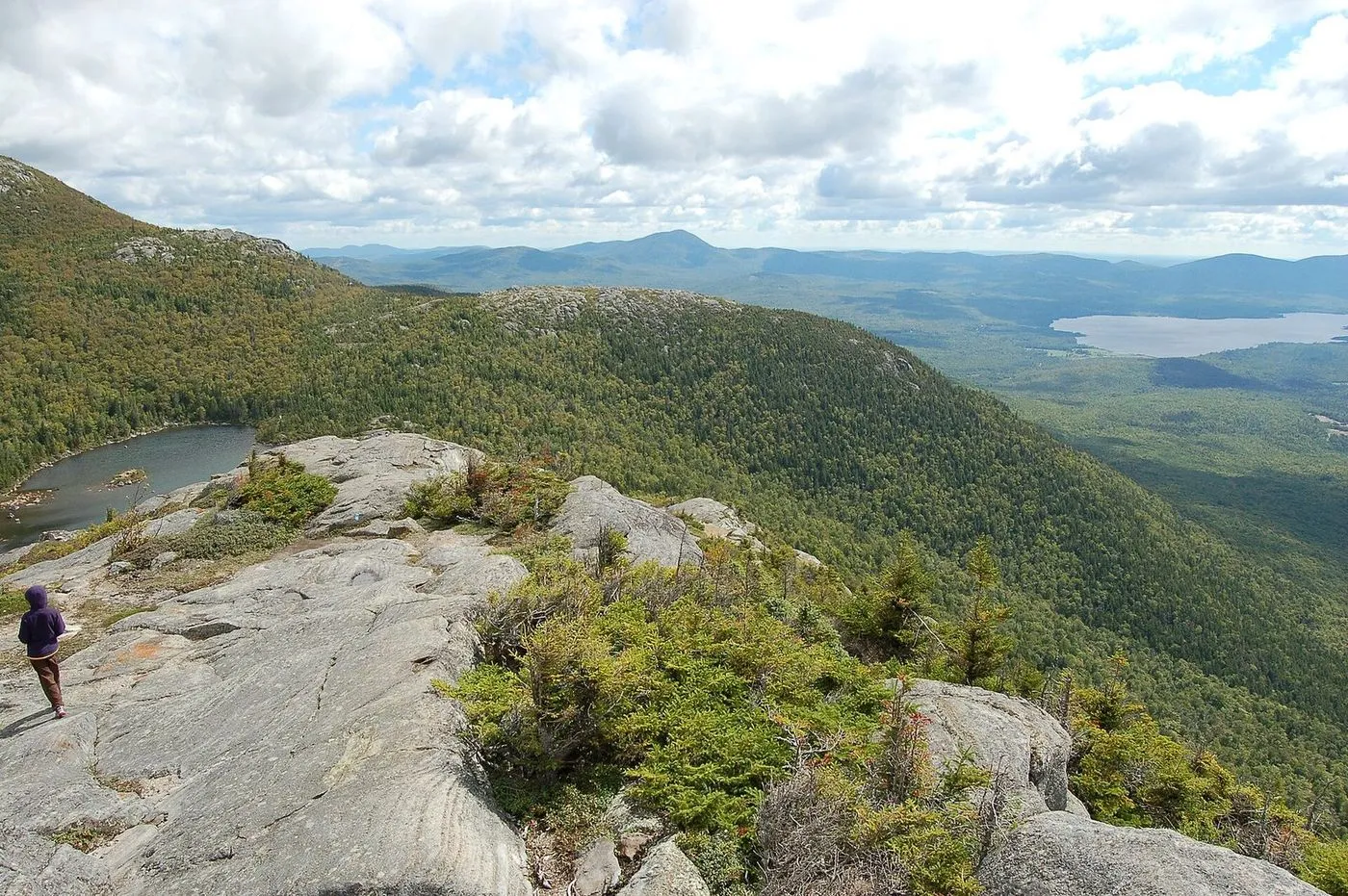 Tumbledown Pond sits just below the ledges on the left, with Webb Lake beyond. The pond is the reason people climb this one. Photo by Tim Pierce via Wikimedia Commons, Public domain.

Bigelow Mountain Range (Stratton)
The Best Ridgeline Many hikers consider the Bigelow Range to be the most scenic in Maine. The Avery Peak and West Peak traverse offers stunning views of Flagstaff Lake below.
- Trail: The Fire Warden’s Trail is a steep but direct route to the col between peaks.
Old Speck Mountain (Grafton Notch)
The Deep Woods Giant Maine’s third-highest peak offers a classic deep-woods experience ending with a fire tower view.
- Bonus: Stop at Screw Auger Falls and Mother Walker Falls in Grafton Notch State Park on your way.
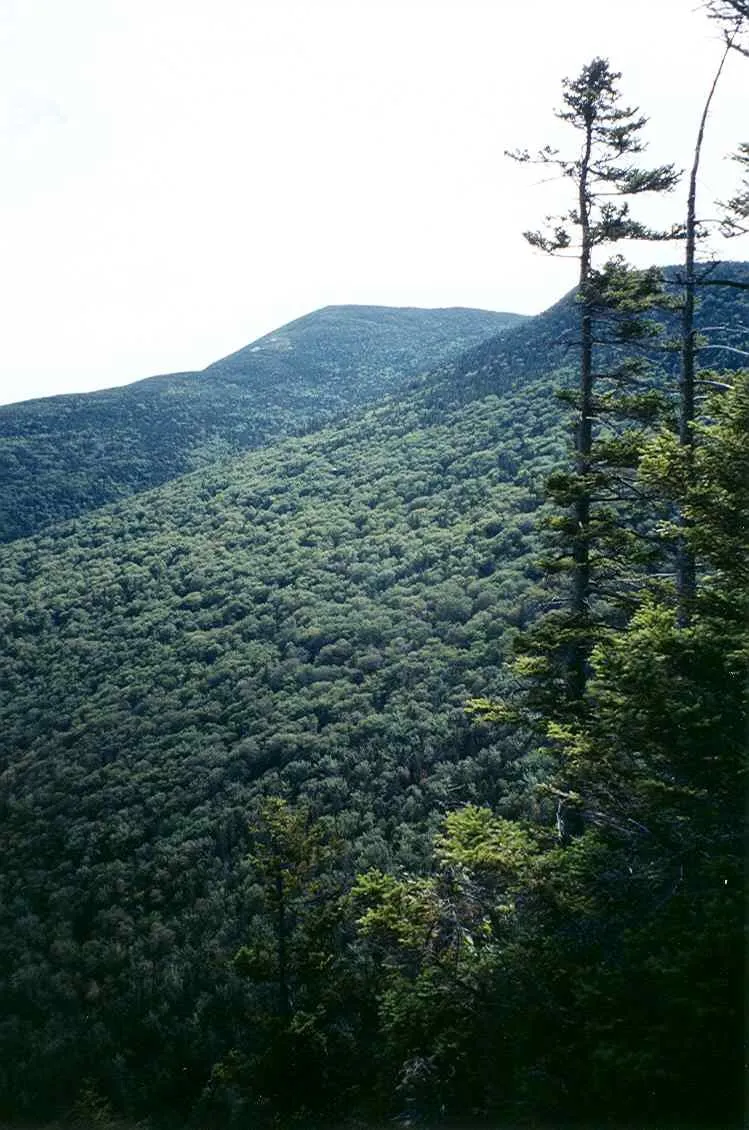 Old Speck from the Eyebrow Trail. An older scanned photograph, and it shows the character of the climb: deep woods most of the way up. Photo by petersent via Wikimedia Commons, Public domain.

Best Coastal Hikes
Marginal Way (Ogunquit)
The accessible Classic A paved, mile-long cliff walk connecting Perkins Cove to Ogunquit Beach. It offers dramatic ocean views with zero technical difficulty.
- Best for: Families, strollers, and sunset walks.
- Tip: Park at Perkins Cove and walk towards the beach.
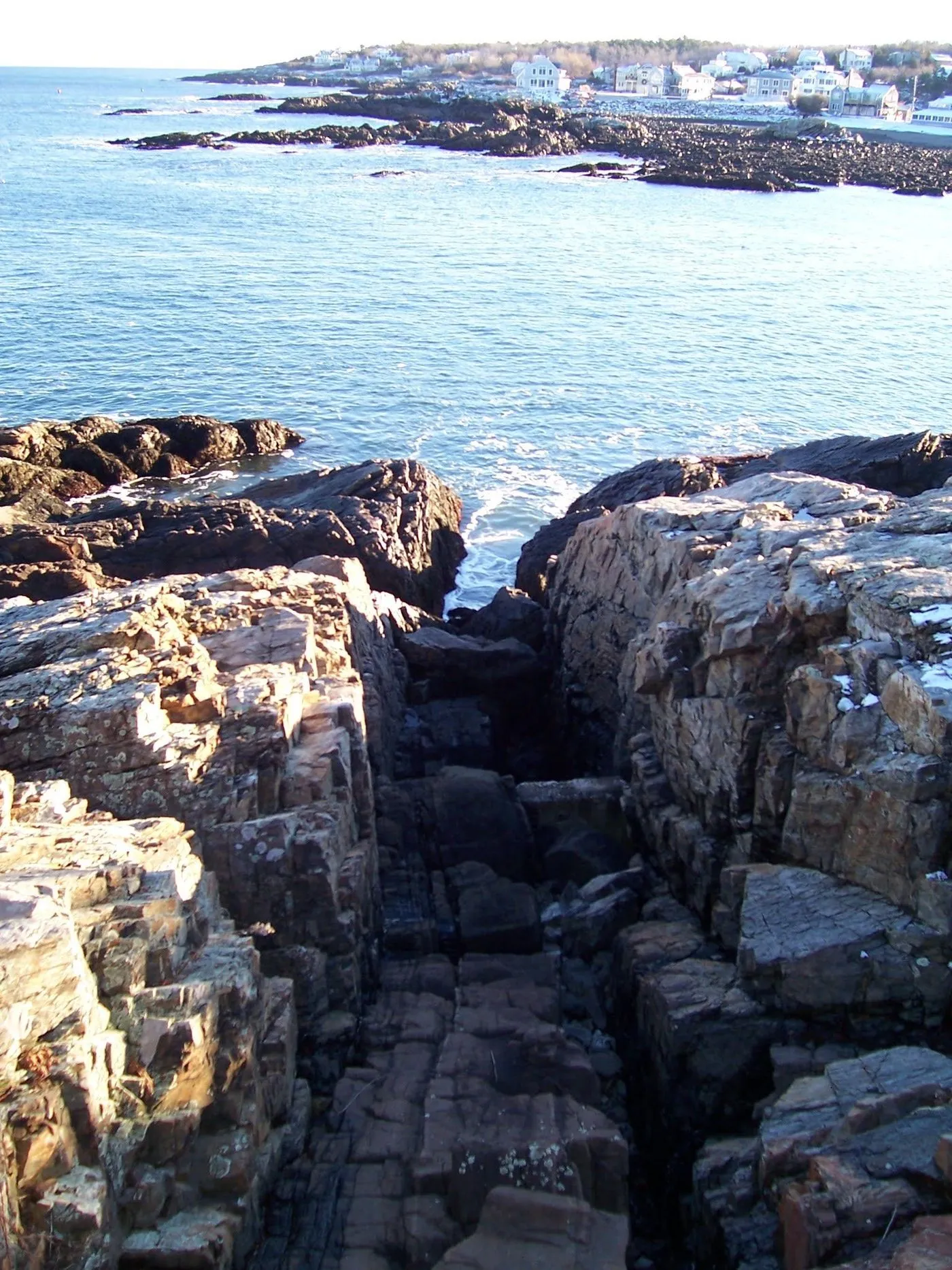 The flume at Oarweed Cove, below the Marginal Way. The path itself is paved and level; the drop beside it is not. Photo by EgorovaSvetlana via Wikimedia Commons, CC BY-SA 4.0, resized.

Great Wass Island Preserve (Beals)
Rugged Downeast Beauty Located far downeast, this Nature Conservancy preserve offers a 4.5-mile loop through jack pine forests to a stark, wind-battered granite coastline.
- Why go: It feels like the edge of the world. The biodiversity here is unique, with rare plants and sub-arctic species.
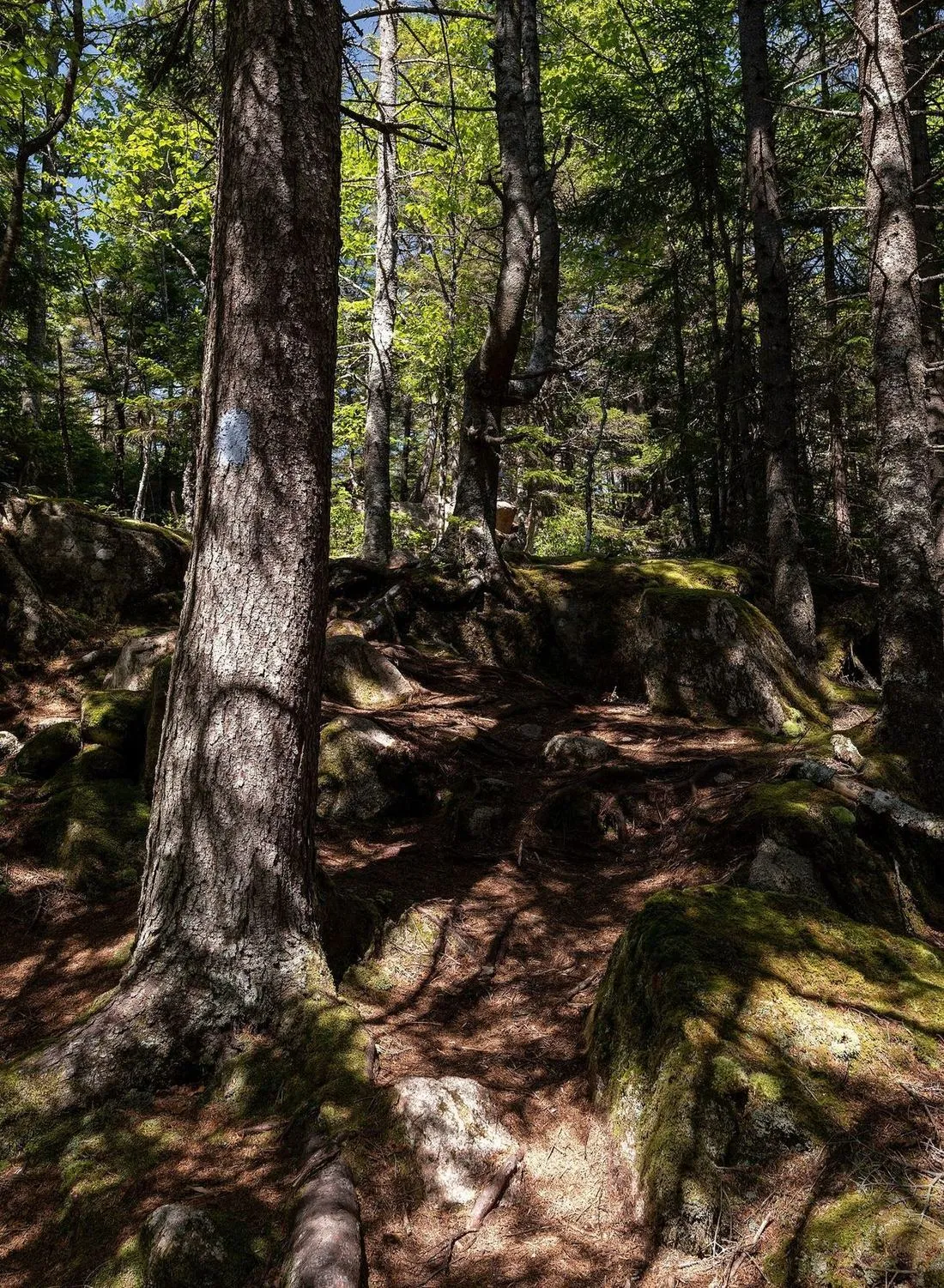 Blue blazes mark the loop on Great Wass. Mossy granite, shallow soil and roots underfoot for most of it, which is slower going than the 4.5 miles suggests. Photo by Jules Verne Times Two via Wikimedia Commons, CC BY-SA 4.0, resized.

Cutler Coast Public Reserved Land (Cutler)
** The “Bold Coast”** Often called the “mini-Inca Trail,” this offers some of the most dramatic coastal hiking on the East Coast. High cliffs drop straight into the crashing Atlantic.
- The Hike: The 10-mile loop is challenging but rewarding. Backcountry campsites are available for overnights.
Morse Mountain to Seawall Beach (Phippsburg)
The Beach Reward A 2-mile walk (one way) on a paved private road (no cars allowed) leads over a “mountain” (it’s a hill) to Seawall Beach, a pristine, undeveloped stretch of sand next to Popham Beach.
- Note: The bugs can be fierce in early summer. Bring spray.
Family-Friendly Hikes
Wolfe’s Neck Woods (Freeport)
Gentle, flat trails winding through pine forests and along the rocky shores of Casco Bay. Perfect for toddlers and osprey watching.
Bradbury Mountain (Pownal)
A short, steep hike to a bald summit with great views. It’s the “first mountain” for many Maine kids. The summit is a popular spot for hawk watching in spring.
Douglas Mountain (Sebago)
A quick hike to a stone tower offering panoramic views of Sebago Lake and the White Mountains.
Planning Your Hike
- Be Prepared: Weather on mountains changes instantly. It can be 70°F at the trailhead and 40°F with 50mph winds at the summit. Always pack layers.
- Footwear: Roots and granite rocks are slippery. Sturdy hiking boots or shoes with good grip are essential.
- Bugs: May and June are black fly season. Bring DEET or a bug net.
- Leave No Trace: Maine’s wilderness is fragile. Carry out everything you carry in. Stay on marked trails to protect alpine vegetation.
- Safety: Tell someone where you are going and when you expect to return. Cell service is non-existent in many hiking areas.
Hidden Gems
Beyond the famous trails, Maine rewards exploration:
- Table Rock (Grafton Notch): A short, steep hike to a dramatic granite slab jutting out over the notch. One of the best views for the effort.
- Blueberry Mountain (Evans Notch): Open ledges covered in wild blueberries (in season) with views into the White Mountains.
- Quoddy Head State Park (Lubec): Coastal trails at the easternmost point in the United States. Dramatic cliffs and bog walks.
- Mount Agamenticus (York): A beginner-friendly summit with surprising views, just minutes from the coast.
Seasonal Considerations
- Spring (May-June): Waterfalls run high, but trails are often muddy and black flies are fierce. Higher elevations may still have snow.
- Summer (July-August): Peak season with best conditions. Start early to beat crowds and afternoon thunderstorms.
- Fall (September-October): Prime hiking weather. Cool temperatures, fewer bugs, spectacular foliage. The most popular time on Maine trails.
- Winter (November-April): Many trails are accessible with proper gear (microspikes, snowshoes). Shorter days require early starts.
The Maine Hiking Community
Maine has an active hiking community that maintains trails, organizes group hikes, and advocates for public land access. The Maine Appalachian Trail Club, local land trusts, and groups like the Maine Island Trail Association all welcome volunteers and new members. Getting involved connects you to people who know the trails intimately and can share recommendations beyond any guidebook.
Whether you’re bagging peaks, walking coastline, or just seeking a quiet path through the woods, Maine delivers hiking experiences that range from gentle to genuinely challenging. The variety is remarkable. You can hike exposed alpine ridges one day and gentle forest trails the next, all within the same state. That’s the gift of hiking in Maine: no matter what you’re looking for, there’s a trail waiting.
Multi-Day Adventures
For those seeking extended backcountry experiences, consider combining hiking with camping in Maine for the full wilderness experience:
- The Appalachian Trail: Maine’s 281-mile section runs from the New Hampshire border to Katahdin. The 100-Mile Wilderness is the most remote stretch of the entire AT.
- Maine Huts & Trails: A European-style hut system offering full-service lodges connected by trails. Hike, ski, or bike between lodges.
- Baxter State Park Loop: Combine multiple peaks and backcountry campsites for a multi-day Katahdin-area adventure.
- Bold Coast Trail: The Cutler Coast trail has backcountry campsites for overnight coastal hiking.
Essential Gear for Maine Hiking
Beyond the basics, Maine conditions demand specific preparation:
- Bug protection: Head nets and DEET are essential May-July. Black flies and mosquitoes can make hikes miserable without protection.
- Layers: Weather changes rapidly. A windproof/waterproof shell should always be in your pack.
- Trekking poles: Maine trails are rocky and rooty. Poles save knees and improve stability on technical terrain.
- Gaiters: For spring hiking or off-trail exploration, gaiters keep debris and moisture out of boots.
The Joy of Maine Hiking
What makes hiking in Maine special isn’t any single trail or summit. It’s the cumulative experience of moving through landscapes that range from oceanside cliffs to alpine ridges. The smell of balsam fir, the cry of a loon echoing across a mountain pond, the satisfaction of reaching a summit cairn after hours of climbing: these moments define Maine hiking.
The trails here demand respect. They’re not manicured or over-maintained. Roots grab at boots, rocks require careful navigation, and the weather reminds you regularly that you’re a guest in the wilderness. But for those who embrace these challenges, Maine offers hiking that’s increasingly rare in the eastern United States: genuinely wild places where you can walk for hours without seeing another person.