
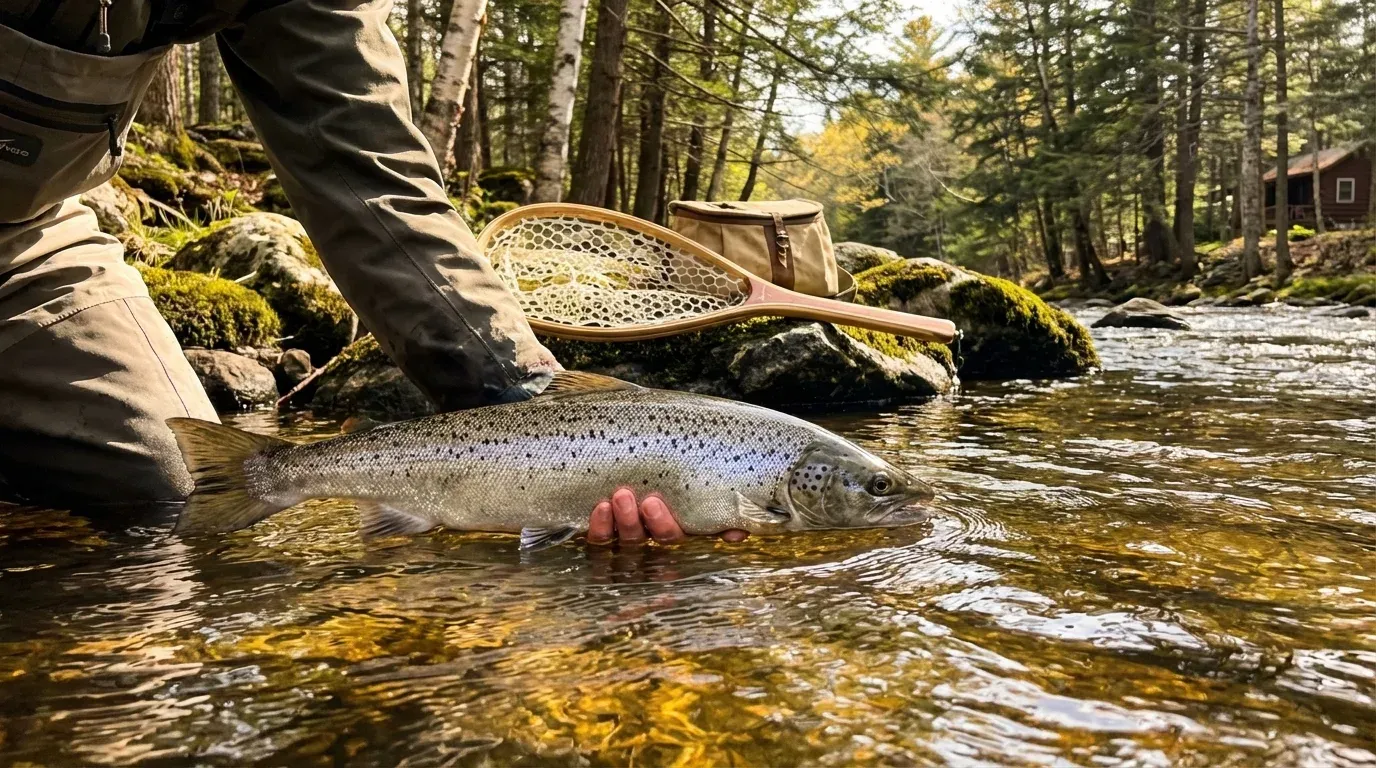
Fishing in Maine 2026: Complete Freshwater & Saltwater Guide
Maine is a legendary destination for freshwater anglers, and the brook trout claim is not marketing. In Maine IFW’s own words, the state “supports the most extensive distribution and abundance of wild brook trout in their native range within the United States,” and is the only state with extensive intact populations of wild, self-reproducing brook trout in lakes and ponds, some of them over 5,000 acres. More than 1,200 lakes and ponds are managed for brook trout, roughly 60% of them sustained by natural reproduction rather than stocking. Add 6,000 lakes and ponds and over 32,000 miles of rivers and streams statewide, and the opportunities really are endless.
Three companion guides go deeper: freshwater and lakes for the species list and zone rules, trout for the 636 State Heritage Fish waters, and saltwater for the $1 registry and coastal limits.
The Prize Catch: Landlocked Salmon
Maine is one of the few places where Landlocked Salmon are native. These acrobatic fighters are found in deep, cold lakes like Sebago, Moosehead, and West Grand.
- Technique: Trolling streamers (like the famous Grey Ghost) just after “ice-out” (usually late April/early May) is a time-honored tradition.
- River Fishing: The West Branch of the Penobscot and Grand Lake Stream are world-renowned for fly fishing for salmon.
Native Brook Trout
Remote ponds in the North Woods and “Heritage Fish Waters” offer the chance to catch these beautiful fish in pristine wilderness settings.
- Rapid River: Famous for large, wild brook trout.
- Rangeley Lakes: Historic fly-fishing waters known for producing trophy fish.
Saltwater Action
Don’t forget the coast. Surfcasting for Striped Bass (“Stripers”) is a summer obsession along beaches and river mouths from Kittery to the Kennebec. Mackerel fishing off public piers is a great, family-friendly activity.
Seasons by Species
- Ice Out (April-May): Peak Trolling for Salmon and Lake Trout (Togue).
- Spring/Early Summer (May-June): Prime Fly Fishing for Brook Trout (Hatches) and Stripers returning to the coast.
- Summer (July-Aug): Bass fishing in lakes; offshore saltwater fishing.
- Fall (Sept): “The Second Season.” Brookies and Salmon color up and become aggressive before spawning.
- Winter (Jan-March): Ice Fishing. A cultural phenomenon in Maine involving “hardwater,” traps (tip-ups), and ice shacks on frozen lakes.
Know the Rules
Maine’s fishing laws are famously complex to protect native species.
- General Law: The baseline rules for the state.
- S-Codes: Special regulations for specific bodies of water (e.g., Artificial Lures Only, Fly Fishing Only).
- Check the Book: Always carry a current law book (or the app) and check the S-codes for your specific location.
Related Guides
- Complete Fishing Guide - Comprehensive guide to fishing regulations, seasons, and techniques
- Ice Fishing Guide - Winter fishing on Maine’s frozen lakes
- Moosehead Lake Guide - Premier destination for landlocked salmon and lake trout
- Best Lakes Guide - Top fishing lakes across Maine
- Maine Ferries - Access to island fishing destinations
Highlights & Species
Pro Tips
- !
Always check the specific regulations for the body of water you're fishing. Maine's laws can be complex (S-Codes).
- !
Hire a registered Maine Guide for remote excursions to increase your success and safety.
- !
Don't forget ice fishing season! It's a social and productive way to fish through the winter.
Frequently Asked Questions
Do I need a fishing license in Maine?
Yes, anyone 16 or older needs a valid Maine fishing licence to fish inland waters. 2026 season fees are $30 for residents and $83 for non-residents, before the agent fee. Non-residents can also buy 1-day at $18, 3-day at $30, 7-day at $62, or 15-day at $66. Buy online through Maine IFW, at town offices, or at general stores statewide.
What fish can you catch in Maine?
Maine offers native brook trout, landlocked salmon, smallmouth and largemouth bass, lake trout (togue), brown trout, and saltwater species like striped bass and mackerel.
What is the best time for fly fishing?
Spring (May-June) for streamers and nymphs; early summer for dry fly hatches. Fall (September) offers aggressive pre-spawn fish.
Can I keep what I catch?
It depends. Many waters, especially for trout and salmon, have strict length and bag limits or are Catch-and-Release only. Always check S-codes for your specific water.
Where is the best fishing in Maine?
For brook trout: Rangeley Lakes and remote North Woods ponds. For landlocked salmon: Sebago Lake, Moosehead Lake, West Grand Lake. For bass: Belgrade Lakes chain. For stripers: Kennebec River mouth and southern beaches.
Best Regions
Know the Laws
Make sure you have the proper licenses and know the current regulations before you go.
View Official Rules